
Share This On


Soy-Based Infant Formula Market Forecast (2024 – 2032)
Report ID
#7304
Report Type
Global
Study Period
2018 - 2035
Base Year
2025
Expected CAGR
7%
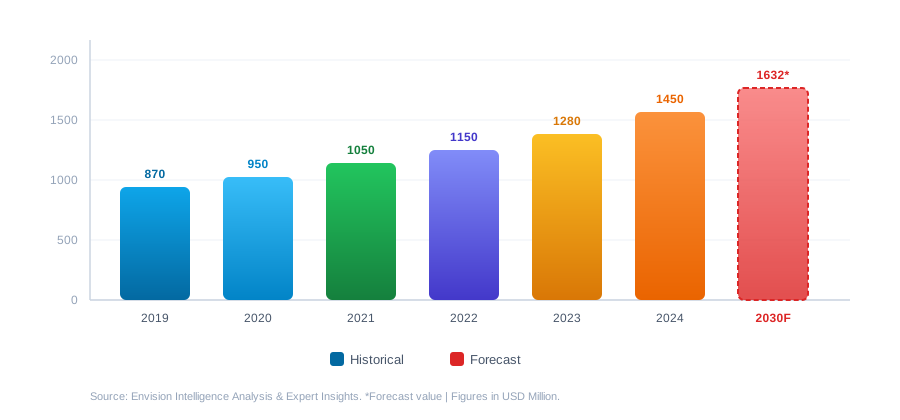
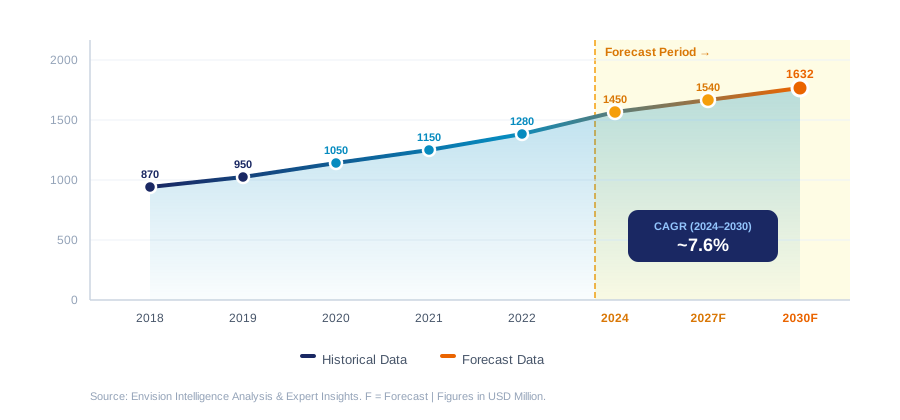
Soy-Based Infant Formula market was valued at $XX Billion in 2021 and is expected to reach $XX Billion by 2029, growing at a CAGR of around 7.63% during the forecast period. The global Soy-Based Infant Formula market growth is mainly attributed to the factors such as increasing number of mothers with low breast milk production, rising awareness among consumers regarding safety, brands, and nutrition, and the development of organic baby food, including soy infant formula. Additionally, soy-based infant formula requirements are expected to rise because these products are readily available and suitable for lactose-intolerant infants. Despite these drivers, the risks associated with the high consumption of soy-based infant formula is a major restraint hampering the market growth. Moreover, increasing R&D activities, growing focus on infant care & nutrition, and shifting focus towards clean label & plant-based products are offering profitable opportunities to the market growth in the upcoming years.
Soy-based infant formula substitutes human breast milk or cow milk, using soy protein and other components. It uses processed soybeans as a source of protein, and it has been formulated in the form of liquid or powder. Soy-based infant formula contains different sugar groups, excluding lactose; other ingredients are naturally occurring plant-based compounds like phytic acid. It differs from human breast milk in multiple ways, including inhibition of iron absorption, though it can be removed in processing.
Soy-Based Infant Formula Market Forecast (2024
Expected CAGR
~7.6%
2026-2035
In 2020, during the COVID-19 pandemic, there have been unprecedented variations in the global sales of infant formula and food products due to rapid changes in consumer purchase patterns. The increasing trend of bulk buying and stockpiling of infant formula has led to certain products being in minimal supply, which has led to price fluctuations in the global infant formula market. By 2022, the COVID-19 pandemic could result in an additional 11.9 million severely malnourished children and 168,000 child deaths. So, it is essential to prioritize nutrition interventions, especially breastfeeding. The key players in the market are taking advantage of the COVID-19 pandemic to promote the outlook of baby formula, saying COVID-19 can transmit through breastfeeding. Predatory marketing of breast-milk substitutes creates a significant barrier to breastfeeding across the globe.
The global Soy-Based Infant Formula market is segregated on the basis of product type, age group, and geography. According to different studies & preventive measures, it is recommended that the soy-based infant formula usage at the first-line treatment should be reduced/discouraged during the first six months of the newborn. Because the infants receiving soy-based infant formula as a sole source of nutrition for 0-6 months will consume between 6-12 mg isoflavones per kg body weight/day. The significant permanent changes due to phytoestrogens are most likely to happen during the 4-6 months developmental stage. Some infants with lactose intolerant may also be sensitized to soy protein, particularly below six months. The prevalence of concomitant soy allergy in infants with cow’s milk allergy varies between Immunoglobulin (IgE) and non-IgE mediated disease. Soy-based infant formula is not recommended before six months in children with food allergies.
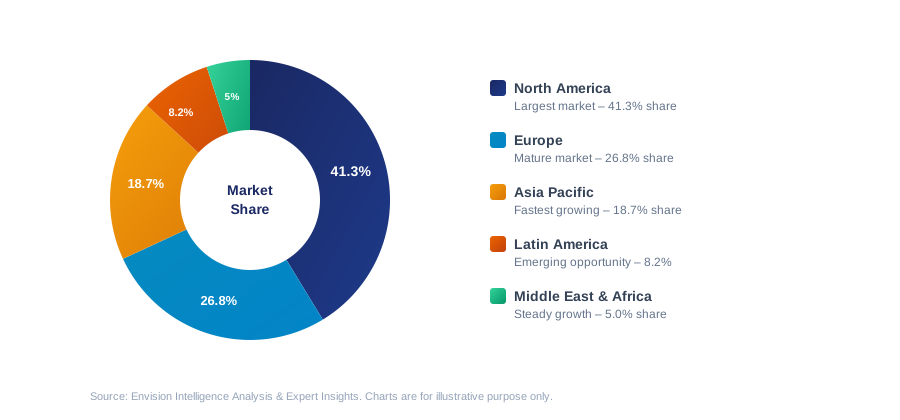
Based on geography, the market is categorized into North America, South America, Europe, Asia Pacific, and Middle East & Africa. Among these, North America region is estimated to hold the significant market share during the forecast period. Amongst North American countries, the U.S. holds a significant market share in the overall market during the forecast period due to innovations in products and technologies. Over the past few years, Soy-based infant formulas have been used in the U.S. The major factors responsible for the market growth include the rising participation of women in the labour force, changing lifestyle of the middle-class population due to rapid urbanization and increasing disposable income. For example, the U.S. Bureau of Statistics states that the working women population has increased from 57.1% in 2018 to 57.5% in 2020. Also, it is perceived that baby infant formula are rich in nutrients and supplements the growth of the baby and growing health consciousness among the consumers in the U.S. are boosting the infant formula demand.
Soy-Based Infant Formula Market Forecast (2024
Along with these companies, there were many other companies considered/ cited in the report while analyzing the Soy-Based Infant Formula market. These companies hold substantial share-owning to the nature of the industry whereas rest of the market shares are marginal chunks to regional and local level manufacturers. other players have considerable presence owing to its robust brand image, geographical reach and strong customer base.
Soy-Based Infant Formula Market Forecast (2024
Market Size Available | 2018 - 2035 |
Base Year | 2025 |
Forecast Period | 2026-2035 |
Historical Period | 2018-2025 |
Segments Analysed | By Type, Application, and Region |
Analyses Covered | Global, Regional & Country Level; Segment Analysis; Drivers, Restraints, Opportunities, Challenges; PESTLE; Porter's Five Forces; Competitive Landscape |
Regions Covered | North America · Europe · Asia Pacific · Latin America · Middle East & Africa |
Report Formats | Extensive Report (350 pages) | Snapshot Report (85 pages) |







Starting from $2700
Starting from $2160
Starting from $2700
Keep up-to-date with our weekly newsletter, Media Pulse.

Data-driven market insights & solutions


