
Share This On


Smart Infrastructure Market – Size, Share, Trends, Growth, Forecast (2024 – 2032)
Report ID
#7277
Report Type
Global
Study Period
2018 - 2035
Base Year
2025
Expected CAGR
7%
In this era Smart Infrastructure is one of the emerging markets. The time when everything is in terms of smart phones, smart devices, smart cars, smart buildings including all this in a more efficient and effective system. For computer technology, smart infrastructure is modern breakthrough. There are several untapped smart infrastructure wide areas to explore. In today’s era the consumers need easy access and always being connected to internet. As far as ICT is involved, the smart infrastructure includes human power associated with economic power supported by the strong and high-speed Internet.
The global smart infrastructure market was valued at $XX Billion in 2018 and is estimated to reach $XX Billion by 2026, growing at a CAGR of around X.XX% during the forecast period. Various factors such as government initiatives for overpopulation and urbanization management, growing requirement of resource management for sustainable development, emergence of AI, IoT and their market application are expected to drive the market for smart infrastructure across the globe. However, significant initial investment requirement and increasing cases of data theft obstruct the growth of this market to some extent.
Smart Infrastructure Market
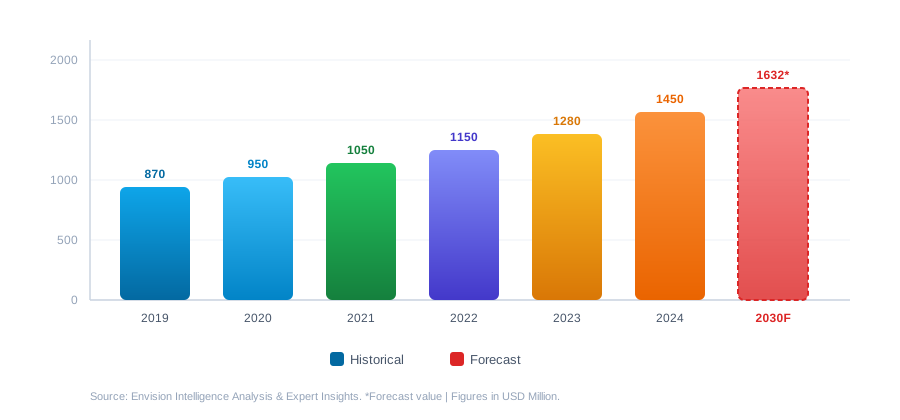
Expected CAGR
~7.6%
2026-2035
The global Smart Infrastructure market is segregated based on type, application, and geography. By type, the smart infrastructure market is segmented into smart grid, smart water network, intelligent transportation system, intelligent buildings, others.
Based on application, the smart infrastructure market is bifurcated into utilities, transport, communications, the built environment.
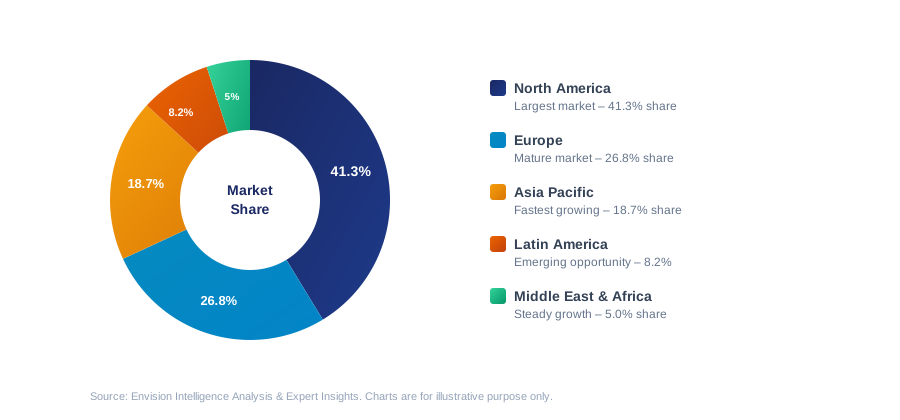
Geographically, the global smart infrastructure market is segmented into five regions, namely, North America, Europe, Asia-Pacific, Latin America, and the Middle East & Africa with a further analysis of major countries in these regions. North America accounted for the largest share of the global smart infrastructure market, followed by Europe and Asia-Pacific region. The largest share of this region is mainly attributed to the fast-developing advanced communication infrastructure, rigid measures for public safety and data privacy, efforts to reduce carbon footprints using innovative ICT technologies, and prioritizing the development of smart cities by many local and national government authorities.
On the other hand, Asia-Pacific region is expected to grow at the highest CAGR during the forecast period. This growth of smart infrastructure market in this region is mainly attributed to the infrastructural development activities in Southeast Asian countries as well as gradually rising technology adoption rate in countries such as India, Taiwan, South Korea, Australia, and New Zealand among others.
Smart Infrastructure Market
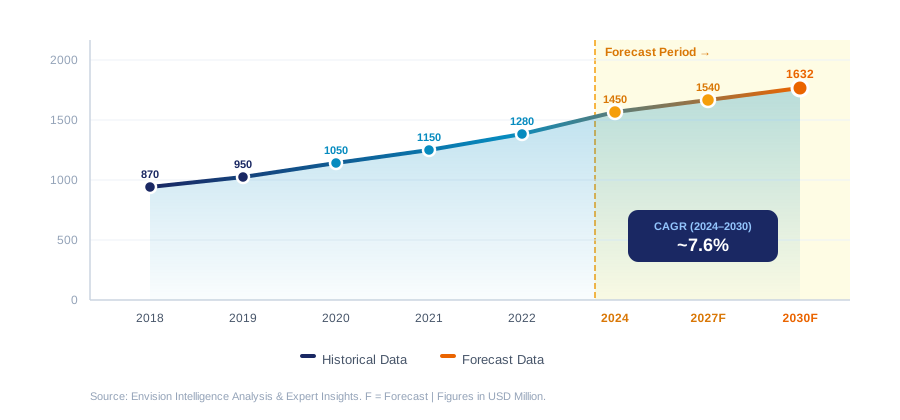
Along with these companies, there were many other companies considered/ cited in the report while analyzing the Smart Infrastructure market. These companies hold substantial share-owning to the nature of the industry whereas rest of the market shares are marginal chunks to regional and local level manufacturers. other players have considerable presence owing to its robust brand image, geographical reach and strong customer base
Smart Infrastructure Market
Market Size Available | 2018 - 2035 |
Base Year | 2025 |
Forecast Period | 2026-2035 |
Historical Period | 2018-2025 |
Segments Analysed | By Type, Application, and Region |
Analyses Covered | Global, Regional & Country Level; Segment Analysis; Drivers, Restraints, Opportunities, Challenges; PESTLE; Porter's Five Forces; Competitive Landscape |
Regions Covered | North America · Europe · Asia Pacific · Latin America · Middle East & Africa |
Report Formats | Extensive Report (350 pages) | Snapshot Report (85 pages) |








Starting from $2700

Starting from $2160

Starting from $2700
Keep up-to-date with our weekly newsletter, Media Pulse.

Data-driven market insights & solutions


