
Share This On


Global Material Testing Equipment Market – Size, Outlook, Trends and Forecast (2024 – 2032)
Report ID
#5993
Report Type
Global
Study Period
2018 - 2035
Base Year
2025
Expected CAGR
7%
Material testing equipment is generally referred to as analysis of various mechanical properties of materials such as hardness, thickness, moisture, corrosion, and others. Material testing is usually a destructive type of testing used for finding out properties of materials before its use in manufacturing a particular product. Growing importance of manufacturing quality products is driving the growth of the market.
Global Material Testing Equipment Market Segments Size & Growth:
A global material testing equipment market is valued at $639.28 Billion in 2017 and is expected to reach $844.266 Billion by 2024 at a CAGR of 4.8%. Key growth factors influencing the market growth involves growing importance of manufacturing quality products, economic benefits, growing demand from composite and plastic and plastic processing industries and investments made by the different organisational bodies are the factors favouring the growth of the market. However, high initial cost of installation and wastage of resources in destructive testing with political and economic uncertainties are hampering the market growth.
Global Material Testing Equipment Market Segments Share:
Global material testing equipment market share is categorised into type, material, end user, and geography. Based on Type, the market is segmented into mechanical testing and non-destructive testing in which mechanical testing is further classified into universal testing machines, servo-hydraulic testing machines, hardness testing equipment and impact testing equipment. Universal testing machines are holding to the major share in the market and accounted for over 56% of the market share. UTM’s perform tests such as bending, compression, tension and some other properties of material and augmented demand for liquid fuel worldwide propelling the demand for the pipeline infrastructure, driving the growth of the material testing equipment market. Non-destructive testing is classified into flaw detectors, hardness & strength testers, thickness gauges and others (moisture, corrosion, and others). It is testing of objects for their flaws and imperfections. NDT methods are expected to witness major technological innovations over the forecast period.
The material is segmented into plastics, metal, rubber & elastomer and ceramics & composites. These materials have their properties and are used according to their functionalities. Ceramics and composites are the fastest growing material segment of material testing equipment market owing to the high demand from aerospace & defence, automotive and construction industries. Due to its advanced material properties, these materials have great demand in these industries.
End users are automotive, construction, educational institutes, aerospace & defence, medical devices, power, and others. Among which power is projected to be the fastest growing segment attributed to increasing investments in the wind energy sector by emerging economies. Educational institutions are holding the largest share in the market owing to the increasing R&D activities and collaboration with industries for better product developments.
Global Material Testing Equipment Market
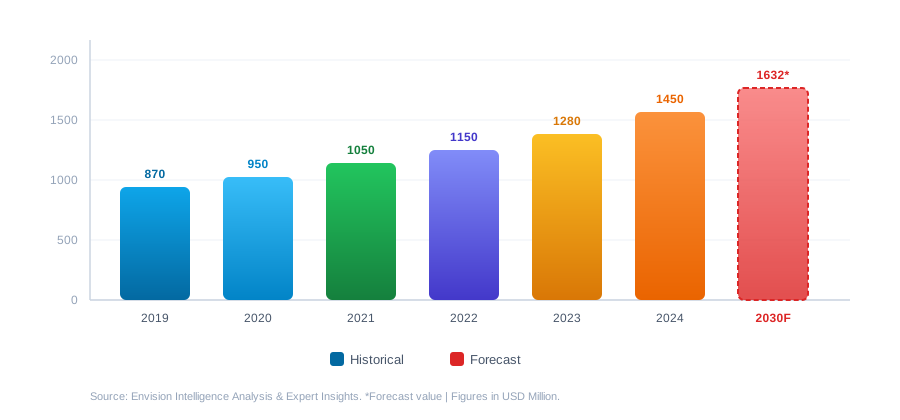
Expected CAGR
~7.6%
2026-2035
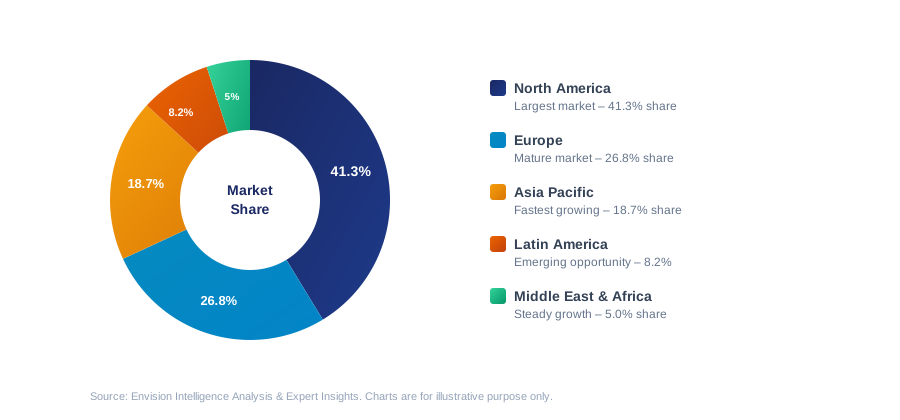
Geographical analysis of material testing equipment market is given as regions of North America, Asia-Pacific, Europe, South America and the Middle East and Africa. Asia-Pacific is identified as the largest and fastest growing market owing to the industrialisation, growing economies, increasing population, and demand for construction and educational institutes are majorly driving the market in this region.
Global Material Testing Equipment Market Trends:
Global Material Testing Equipment Market Research Report includes:
An executive summary condensing the whole report such that essential authority can rapidly twist up doubtlessly acquainted with brief overview and conclusion.
To have complete market analysis, industry value chain analysis, Porter’s Five Force Analysis, PESTLE, SWOT analysis, and Y-o-Y analysis were carried to understand the market more comprehensively.
Regional and global diversity is analysed with the major countries and the unions. Scrutinizing the revenue generation on Year-On-Year
Global Material Testing Equipment Market
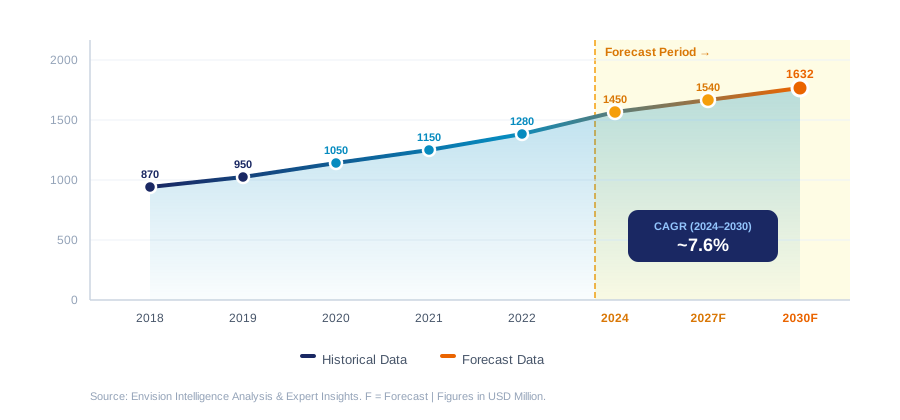
Identifying DROC in the current market and their impact in altering the market dynamics.
Competitive landscape analysis to identify the mergers and acquisitions which will have a comparative financial analysis with major competitors.
Expertise investment opportunities by an analyst to the individual and organisation to have a better foothold in the market.
The major market players are
Along with these companies, there were many other companies considered/cited in the report while analysing the global material testing equipment market. These companies hold substantial share-owning to the nature of the industry whereas rest of the market shares are marginal chunks to regional and local level manufacturers. Other players have considerable presence owing to its robust brand image, geographical reach and strong customer base.”
Global Material Testing Equipment Market
Market Size Available | 2018 - 2035 |
Base Year | 2025 |
Forecast Period | 2026-2035 |
Historical Period | 2018-2025 |
Segments Analysed | By Type, Application, and Region |
Analyses Covered | Global, Regional & Country Level; Segment Analysis; Drivers, Restraints, Opportunities, Challenges; PESTLE; Porter's Five Forces; Competitive Landscape |
Regions Covered | North America · Europe · Asia Pacific · Latin America · Middle East & Africa |
Report Formats | Extensive Report (350 pages) | Snapshot Report (85 pages) |








Starting from $2700

Starting from $2160

Starting from $2700
Keep up-to-date with our weekly newsletter, Media Pulse.

Data-driven market insights & solutions


