
Share This On


Asia Pacific Biosimilar Market – Size, Outlook, Trends and Forecast (2024 – 2032)
Report ID
#4312
Report Type
Regional
Study Period
2018 - 2035
Base Year
2025
Expected CAGR
7%
Biosimilar or follow-on-biologics are similar to the brand biopharmaceutical drugs which are synthetic versions of original products. Biosimilars have a patent expiration, and their developments are the crucial part of the overall growth of biosimilar market. Biosimilars are derived from yeast, animals, bacteria, plants, and viruses.
Asia Pacific Biosimilars Market Segments Size & Growth:
Asia Pacific Biosimilars Market is accounted for $ XX billion in 2017 and expected to grow at a CAGR of XX% to reach $XX billion by 2024 during the forecast period 2018-2024. Major factors that are driving the market growth are next-gen business, high growth in chronic diseases, and less cost biosimilar drugs. However, high initial investments in research hinder the growth of the protein expression market.
Asia Pacific Biosimilars Market Segments Share:
Asia Pacific Biosimilars Market is categorised into by-product which consists of insulin, interferon, human growth hormone, and granulocyte colony-stimulating factor. Granulocyte colony-stimulating factor has the most significant share as they are cheaper compared to others. By services, Asia Pacific biosimilars market is segmented into clinical trials and contract research and manufacturing services. Among all clinical trials are expected to have high growth rate during the forecast period 2018-2024, due to increase in demand for low-cost drugs and vaccines that can treat various chronic diseases. The technology is segregated into chromatography, recombinant DNA technology, monoclonal antibodies technology, and nuclear magnetic resonance technology. Monoclonal antibodies technology is expected to have the most significant share in the market due to treating chronic diseases in a single operation
Asia Pacific Biosimilar Market
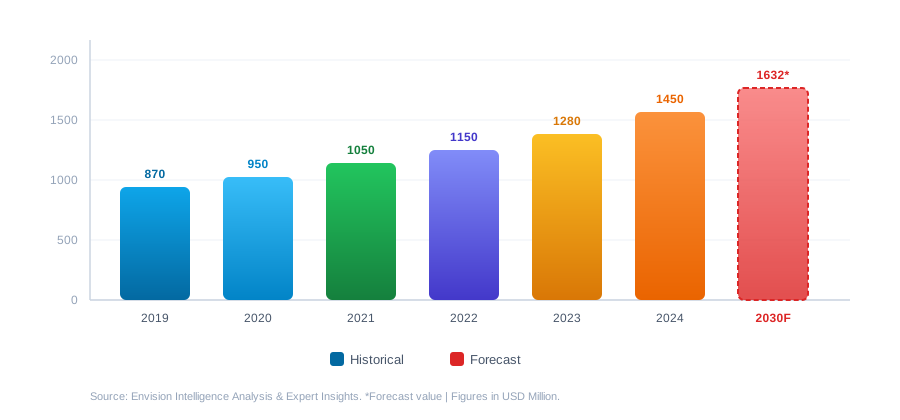
Expected CAGR
~7.6%
2026-2035
Blood disorders and autoimmune disease are leading in biosimilars among applications owing to the change in patent scenario and high-rated biologics. By Geography, China is dominating the biosimilars market, and the growth in the Asia Pacific is mainly attributed because of the favourable government’s regulations. Furthermore, India is witnessing the fastest growth during the forecast period, due to rising chronic diseases, adoption of biosimilar drugs and investment in R&D research.
Asia Pacific Biosimilars Market Segments Trends:
Asia Pacific Biosimilars Research Report:
An executive summary condensing the whole report such that essential authority can rapidly twist up doubtlessly acquainted with brief overview and conclusion.
Asia Pacific Biosimilar Market
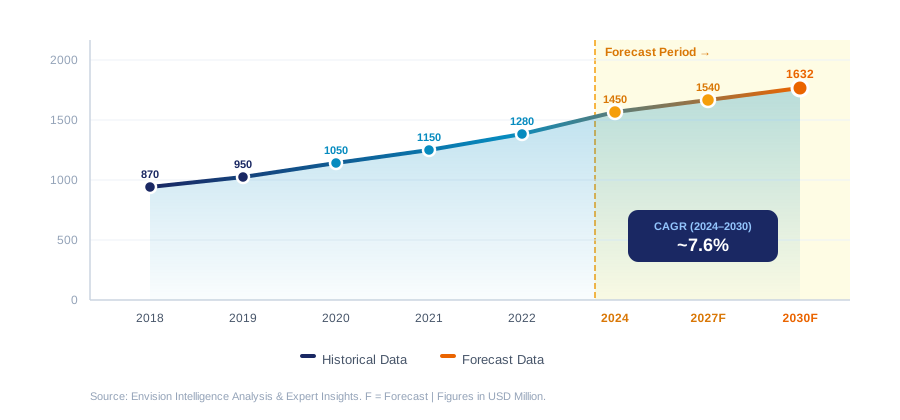
To have complete market analysis, industry value chain analysis, Porter’s Five Force Analysis, PESTLE, SWOT analysis, and Y-o-Y analysis were carried to understand the market more comprehensively.
Regional and global diversity is analysed with the major countries and the unions. Scrutinizing the revenue generation on Year-On-Year
Identifying DROC in the current market and their impact in altering the market dynamics.
Competitive landscape analysis to identify the mergers and acquisitions which will have a comparative financial study with significant competitors.
Expertise investment opportunities by an analyst to the individual and organisation to have a better foothold in the market.
Asia Pacific Biosimilar Market
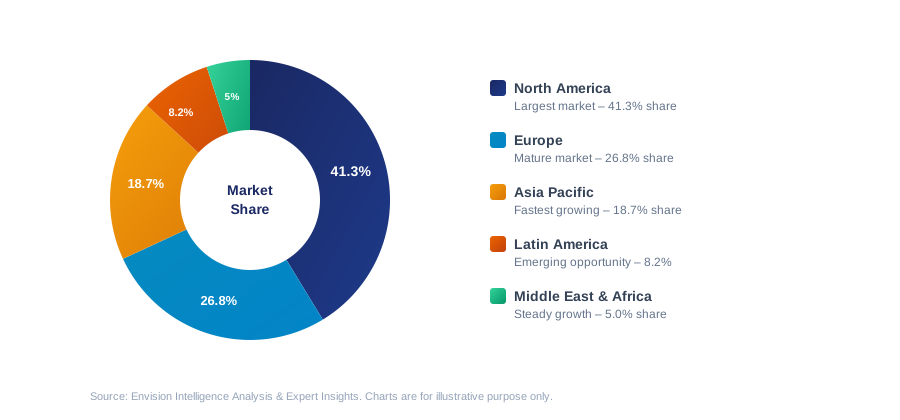
Market Size Available | 2018 - 2035 |
Base Year | 2025 |
Forecast Period | 2026-2035 |
Historical Period | 2018-2025 |
Segments Analysed | By Type, Application, and Region |
Analyses Covered | Global, Regional & Country Level; Segment Analysis; Drivers, Restraints, Opportunities, Challenges; PESTLE; Porter's Five Forces; Competitive Landscape |
Regions Covered | North America · Europe · Asia Pacific · Latin America · Middle East & Africa |
Report Formats | Extensive Report (350 pages) | Snapshot Report (85 pages) |








Starting from $2700

Starting from $2160

Starting from $2700
Keep up-to-date with our weekly newsletter, Media Pulse.

Data-driven market insights & solutions


